Art by Mack Paul Brings xʷməθkʷəy̓əm Language and Story to the YWCA
At the heart of the YWCA’s downtown Vancouver program centre, a new art installation invites reflection, connection and healing. Strength and Vision is a two-part original work by xʷməθkʷəy̓əm artist kʷəlasəltən Mack Paul (pronouns: they/them), created specifically for a space shared by women, children, two spirit people, community members and staff.
It is more than a visual piece. It is a statement of presence, a cultural marker and a message of resilience.
About the Artist
Artist Statement and Practice
kʷəlasəltən (Mack Paul) is a two spirited, queer, disabled artist from xʷməθkʷəy̓əm (Musqueam), living and creating on their traditional territory in what is now known as Vancouver. They have been actively practising art since 2021 and are deeply rooted in both traditional and contemporary expressions of Coast Salish visual culture. Their work is grounded in story, language and responsibility to land and community.
Though not directly mentored, Mack’s practice is shaped by constantly learning from those who came before and those who are practising today. Their creative process always includes research into hən̓q̓əmin̓əm̓, the language of their people and the land. They are a young speaker and a passionate advocate for language revitalization. “Musqueam no longer has fluent speakers,” Mack explains. “But it is my hope that through my small contributions in learning and sharing hən̓q̓əmin̓əm̓, the language will thrive once again on these lands.”
Journey and Public Work
For Mack, art is also a way to return home. Their practice is deeply personal and relational. It is rooted in accountability to the land and the people they come from. Although they have always felt drawn to creative expression, their early experiences were shaped by the encouragement of their grandmother, who fostered their love of drawing and making things by hand.
In 2019, a friend asked Mack to create a one-off design in Coast Salish style. That small act of trust and courage became a turning point. It marked the beginning of Mack’s journey into Coast Salish art and into a deeper connection with their language, teachings and identity. “With every project I learn something new,” they shared in an interview about the YWCA installation. “It feeds my spirit. It allows me to explore our culture and our language, which are things I wear on my sleeve.”
Since then, Mack’s work has appeared throughout their home territory in public, visual and architectural contexts. Their recent commissions include the Invictus Games 2025 visual identity, sʔi:ɬqəy̓ for Vancouver Coastal Health, məθkʷəy̓ ʔiʔ sʔi:ɬqəy̓ for TransLink and a large exterior installation for First United in the Downtown Eastside.
Mack continues to share their own stories and the stories of their ancestors through their art. It is a tremendous honour, they say, to have their creations live on the land they belong to.
The art: Strength and Vision
Creating in Relationship
Before beginning the design process for the YWCA, Mack spent time learning about the organization, its history, its purpose and the people it serves. Conversations with staff revealed shared values like strength, care, safety and vision. One word in particular, strength, became a creative anchor.
Mack visited the site, walked through the space and reflected on what it means to offer support and refuge to others. In a building where people access child care, health and fitness programs and community services, Mack sought to create something that would offer both comfort and inspiration. The result is Strength and Vision, a two-part installation created for the elevator panels.
The Eagle and the Owl – A Two-part Installation Created for the Elevator
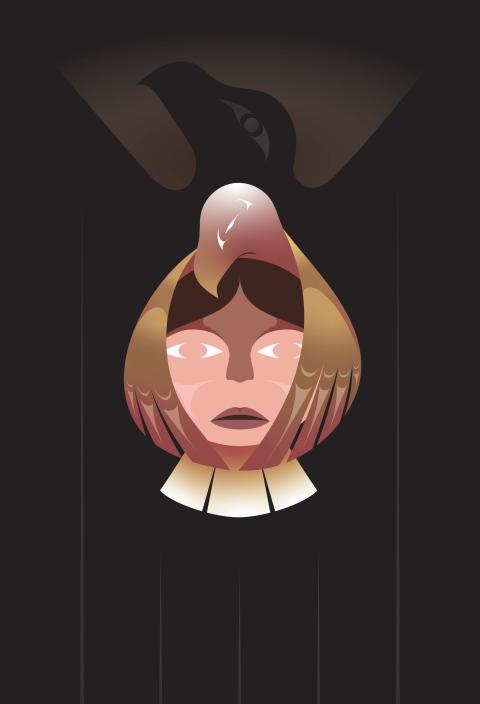
The first piece features an eagle wrapping its wings protectively around a feminine figure’s face. The eagle, a powerful symbol across many Indigenous nations, represents strength. But in their culture’s teachings, strength is quiet and gentle, grounded in care and safety rather than dominance. The eagle’s embrace is meant to be inclusive and universal. “Anyone can see themselves in it,” Mack explained. “It is a reminder that you are strong, and you are held.”
In the background, a more abstract eagle hovers. It is less defined and more spiritual. For Mack, this secondary image represents ancestors and spirit, the presence of those who came before and who continue to offer guidance.
“You are never alone,” they said. “Even if it feels like it, your family and your ancestors are with you. You can draw strength from them.”
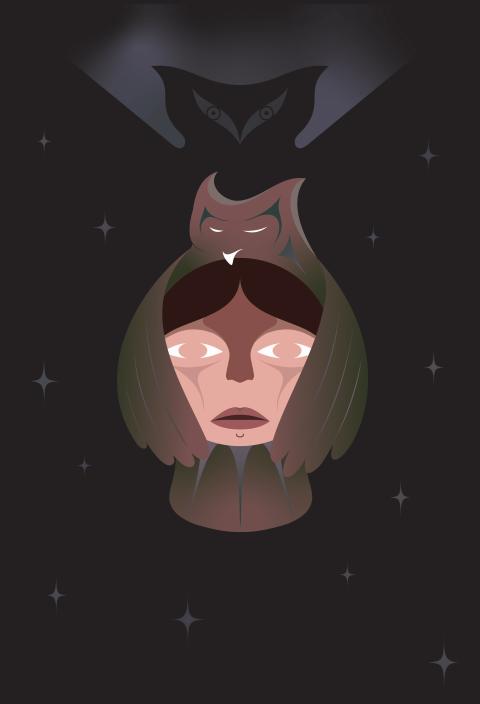
The second piece features an owl, a creature often misunderstood. While some associate owls with death, Mack was taught differently. In their teachings, owls are messengers. They do not bring good or bad news. They simply bring what needs to be known. Owls are also navigators, able to move silently through the night. For Mack, the owl represents vision, the ability to see through uncertainty and guide oneself and others through the dark.
This symbolism aligned with another key word in the YWCA’s work, vision. Not only the organization’s long-term vision for equity and inclusion, but the hopes and dreams that women, two-spirit people and families hold for their futures. In the artwork, the owl embraces a second face, echoing the message of protection, clarity and guidance.
Language and Presence on the Land
Mack’s commitment to incorporating hən̓q̓əmin̓əm̓, the language of the xʷməθkʷəy̓əm people, is central to their work. For this installation, they included the words for p̓aq̓əs (bald eagle) and ci:tməxʷ (great horned owl), ensuring that the piece is not only about Indigenous representation but about presence that is specific to the land the YWCA stands on.
“Too often, Indigenous art in public spaces does not reflect the local nations,” Mack said. “There is a lot of northern form line art in Vancouver, which is beautiful, but it is not from here. It is confusing for people who then think that is what Coast Salish art is. So having host nation art here is really important.”
They noted that in many parts of downtown, there is still very little visibility of Musqueam, Squamish and Tsleil-Waututh artists. Spaces like the YWCA are a chance to change that and to make space for stories that come from this land and its people.
Visibility and Intention
Throughout the process, Mack remained involved in both the creative and technical aspects. They participated in conversations about print colour, lighting and materials. They expressed concern that the darker tones might not show clearly on glass or under bright lighting and offered thoughtful adjustments to ensure the final work would be visible and true to their vision.
This care reflects the intentionality Mack brings to all their work. Their major public commission for First United, a redevelopment project in the Downtown Eastside, involved large aluminum panels, custom fabrication and lighting elements. Like Strength and Vision, it was rooted in care and inspired in part by Mack’s maternal grandmother, who supported urban Indigenous communities.
“I want my art to be visible. I want it to reflect my intent,” Mack said. “And I want people to feel something when they see it. A reminder that they are not alone. That they are strong.”
A Living Cultural Invitation
More than a static installation, Strength and Vision is a living invitation. It asks people to reflect on where they draw strength, how they move through uncertainty and whose languages and stories are made visible in the places we gather.
It also reminds us that Indigenous art is not only symbolic. It is specific. It is ongoing. It holds story, relationship and future. For Mack Paul, it is a way to continue learning, sharing and holding space for what comes next.
“I hope guests, visitors and settlers take time to learn about our people and our language,” they said. “That is what I want my art to do.”