The Stories Behind our Illustrations: Featuring the Work of Tamia Overes
Indigenous history is not just something we look back on. It is being written, painted, carved, spoken and shared every day.
This Indigenous History Month marks the beginning of a more intentional effort to feature Indigenous artists whose work carries culture, language, stories and knowledge forward.
We begin with Tsleil-Waututh artist Tamia Overes, whose illustrations became part of YWCA BC's visual identity through our rebrand. More than artwork, each piece carries its own story, rooted in relationships, teachings and connections to the land.
Below, Tamia shares the inspiration and meaning behind each illustration in her own words.
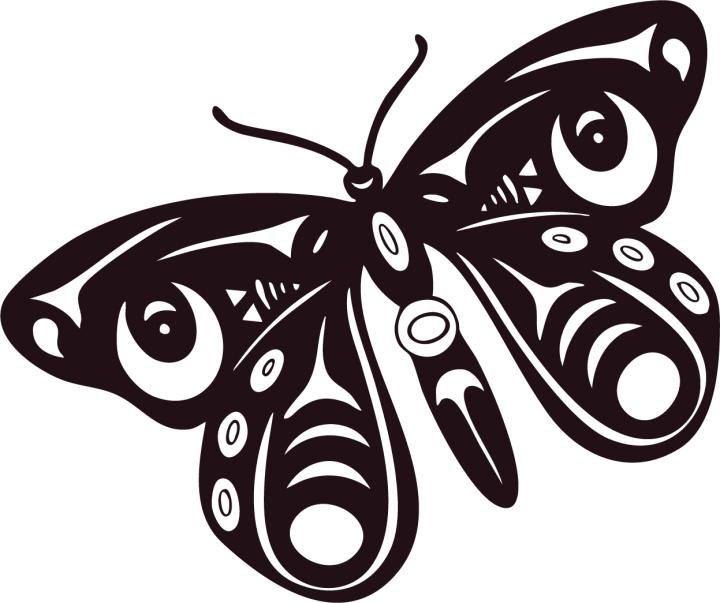
Transformation
Theme:
Cultural Revitalization & Hope for the Future
This illustration represents transformation, renewal, and the ongoing resurgence of Indigenous culture and identity. The butterfly’s form symbolizes growth after hardship, echoing the strength of survivors and communities who continue to reclaim language, culture, and connection to land. Its symmetrical wings reflect balance, forward movement, and the beauty that emerges through healing and revitalization.
Symbolism:
- Butterfly: transformation, hope, new beginnings
- Symmetry: harmony, groundedness, cultural balance
- Movement + flow lines: the continuous journey toward cultural and community wellness
Coast Salish Elements:
This design incorporates Coast Salish–inspired shapes and internal forms, honouring local teachings and visual traditions through modern interpretation.
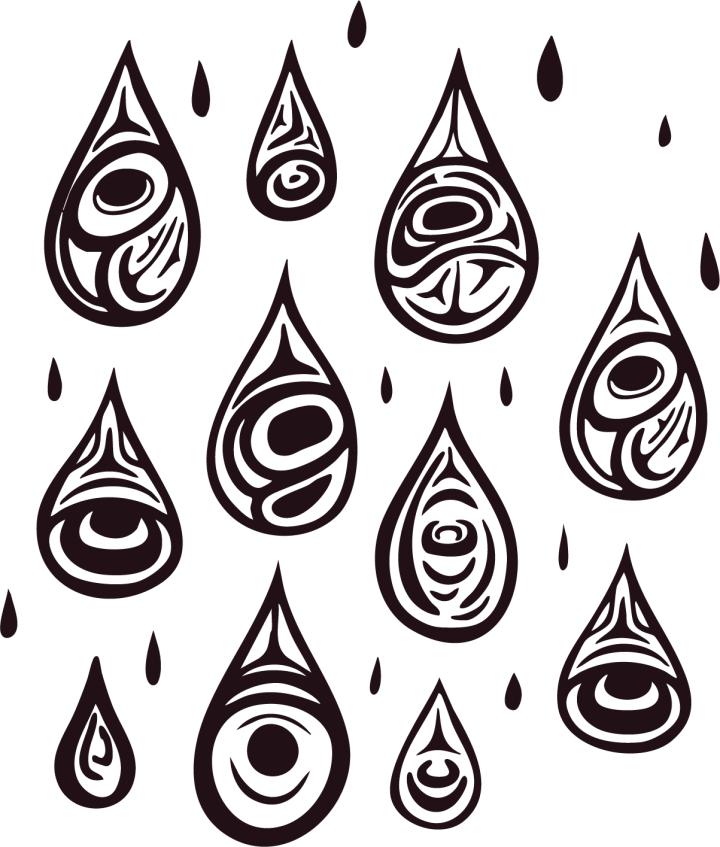
Tears of the Land
Theme:
Residential School Impacts, Truth & Reconciliation, Remembrance
This illustration represents collective grief and remembrance for the children, families, and communities impacted by residential schools. Each teardrop holds internal movement and story, symbolizing the pain carried across generations and the truths that continue to come to light. The repetition of tears reflects how widespread this harm was- not one story, but thousands, all connected through shared history and the need for healing.
Symbolism:
- Tears: mourning, truth-telling, emotional release
- Repetition: the scale of loss and the ongoing acknowledgment of survivors’ experiences
- Flowing internal forms: memories, stories and the movement toward transparency and healing
Coast Salish Elements:
The internal shapes and negative-space curves within each teardrop draw from Coast Salish visual language, honouring local cultural identity while conveying emotional depth in a respectful, symbolic way.
Paddling Together
Theme:
Residential School Impacts, Truth & Reconciliation, Remembrance
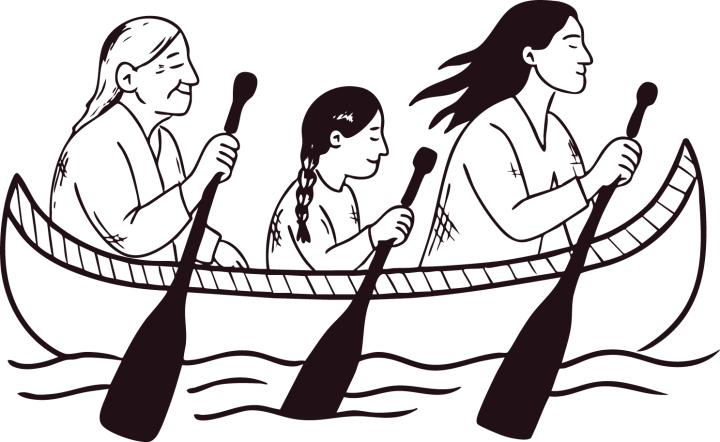
This illustration honours the strength carried across generations within Indigenous families and communities. The canoe holds an Elder, a youth, and an adult, each paddling together toward a shared future. Their movement across the water reflects resilience, guidance, and the passing of teachings from one generation to the next. The flowing lines of the waves symbolize continuity, connection to the inlet, and the ongoing journey of healing and cultural revitalization.
Symbolism:
- Three generations: knowledge transfer, family bonds and community continuity
- Canoe: journey, unity and collective strength
- Paddles in motion: active participation in healing, everyone contributing
- Water lines: Coast Salish connection to the inlet and the teachings of the land
Coast Salish Elements:
Wave patterns and canoe linework are inspired by Coast Salish forms and movement, grounding the piece in local territory and cultural identity.
Braiding Generations
Theme:
Intergenerational Healing, Cultural Revitalization
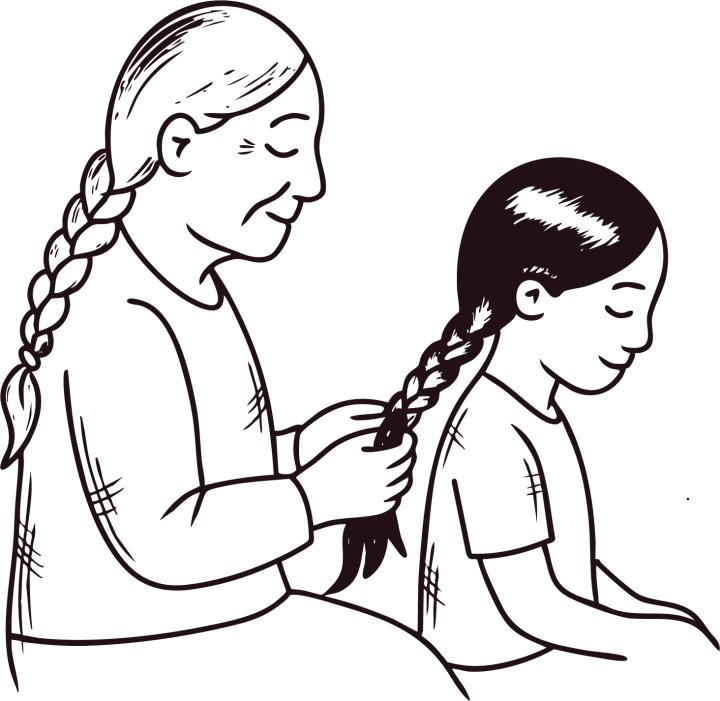
This illustration honors the intimate act of braiding as a form of care, protection, and cultural continuity. An Elder gently braids a young girl’s hair, symbolizing teachings being passed down with love, patience, and intention. The quiet connection between them reflects the strength of Indigenous families and the healing that happens through everyday cultural practices.
Symbolism:
- Braiding hair: identity, protection and the transmission of teachings
- Elder + youth: wisdom flowing forward, reclaiming what colonization attempted to sever
- Calm, grounded poses: safety, belonging and the restoration of family roles
- Hands in motion: active healing and reclamation of culture through practice
Coast Salish Elements:
Soft curvature and flowing linework echo Coast Salish visual rhythm, grounding the scene in local culture while highlighting the relational connection between generations.
Reviving the Canvas
Theme:
Cultural Revitalization, Truth & Reconciliation
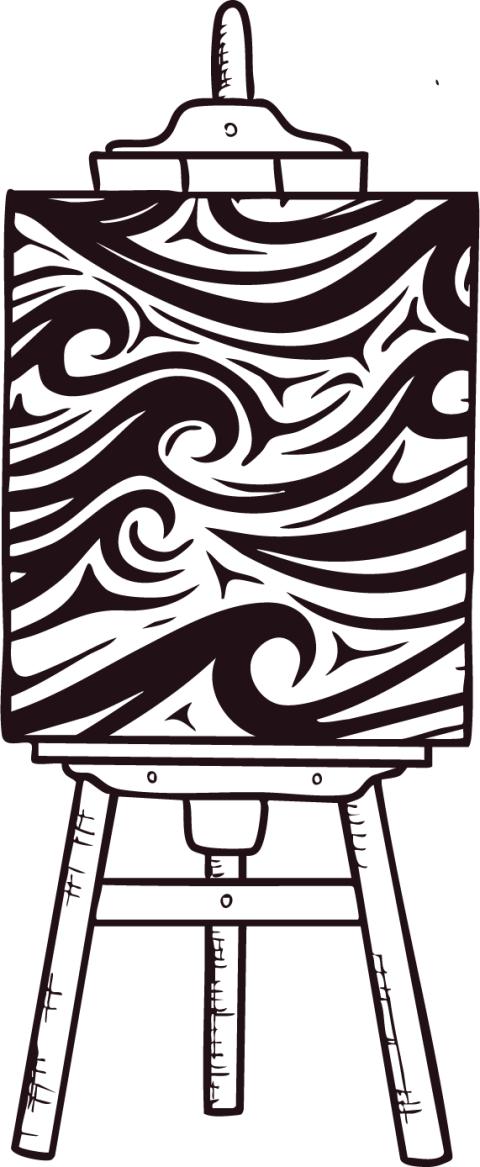
This illustration centers Indigenous art as an active force of healing, identity, and cultural resurgence. The easel holding a canvas filled with Coast Salish–inspired movement represents both the continuation and revitalization of visual traditions that colonial systems attempted to suppress. By placing the artwork front and center, the piece honours the role of Indigenous artists in reclaiming narrative, preserving teachings, and creating pathways for future generations to see themselves reflected in their culture.
Symbolism:
- Canvas on an easel: reclaiming space through art, creation as resistance
- Flowing internal patterns: Coast Salish presence, movement and living culture through waves
- Standing easel legs: stability, longevity and an unshakable artistic foundation
- Abstract wave and motion shapes: connection to land, water and ancestral knowledge
Coast Salish Elements:
The canvas incorporates Coast Salish–inspired shape language, honouring the visual traditions of the territory while expressing contemporary interpretation and continuation of cultural practices.
The Witnessing Wind
Theme:
Truth & Reconciliation, Cultural Revitalization, Ancestral Presence
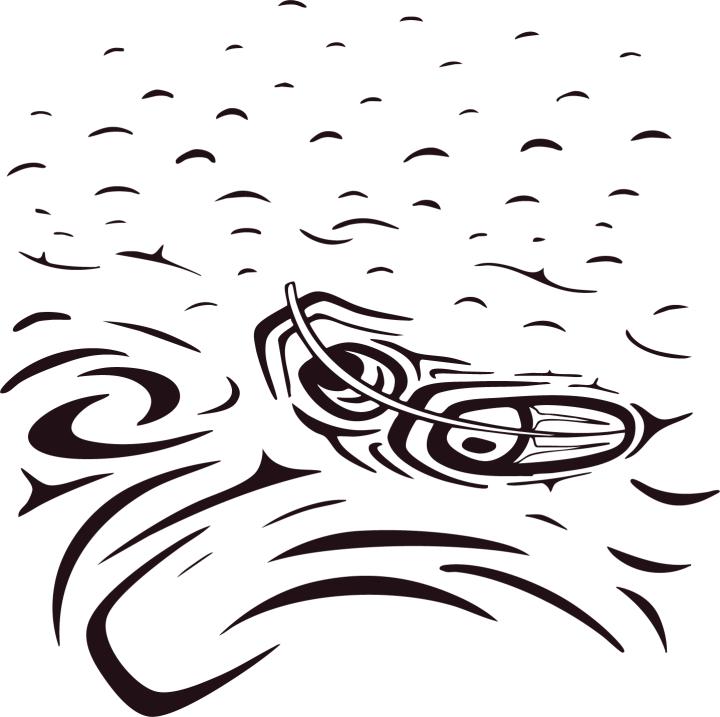
This illustration symbolizes the presence of ancestors and the land as silent witnesses to both the traumas and the resurgence of Indigenous peoples. The central eye-like form represents watchfulness, memory, and the enduring spirit that continues to guide and protect communities. Surrounding lines flow like wind and water, echoing the movement of teachings, stories, and resilience carried across generations. Together, the imagery reflects both the truths held by the land and the ongoing revitalization that emerges from acknowledging those truths.
Symbolism:
- Central “witness” form: ancestors, memory, guidance, the land observing history
- Flowing motion lines: transformation, movement toward healing, cultural continuity
- Wind + water shapes: connection to territory, the inlet and the natural world as archive
- Scattered marks above: voices, stories, echoes of the past still present today
Coast Salish Elements:
The design uses Coast Salish–inspired shape language, including crescents, flow lines and stylized movement motifs, grounding the piece in local cultural identity while maintaining a contemporary interpretation.
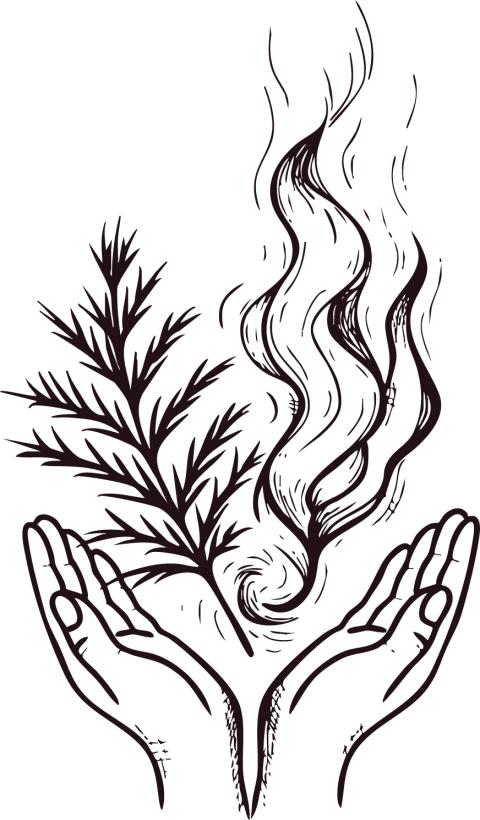
Cedar & Smoke Offering
Theme:
Truth & Reconciliation, Honouring Survivors, Community Healing
This illustration represents an offering of cedar and smoke; symbols of cleansing, protection, and spiritual grounding across many Indigenous communities. The open hands gesture toward care, acknowledgement, and the act of holding space for truth. Rising smoke signifies prayers, remembrance, and the release of grief carried through generations. This piece honours survivors, the children who never returned home and the communities who continue to heal through ceremony and cultural practices.
Symbolism:
- Cedar branch: cleansing, protection, spiritual medicine
- Rising smoke: prayers, remembrance, connection to ancestors
- Open hands: honouring truth, creating safe space, community support
- Upward motion: healing, resilience, reclaiming cultural practices
Coast Salish Elements:
The gesture of the smoke and the flowing motion lines reflect Coast Salish visual rhythm, connecting ceremony to land, water and ancestral presence.
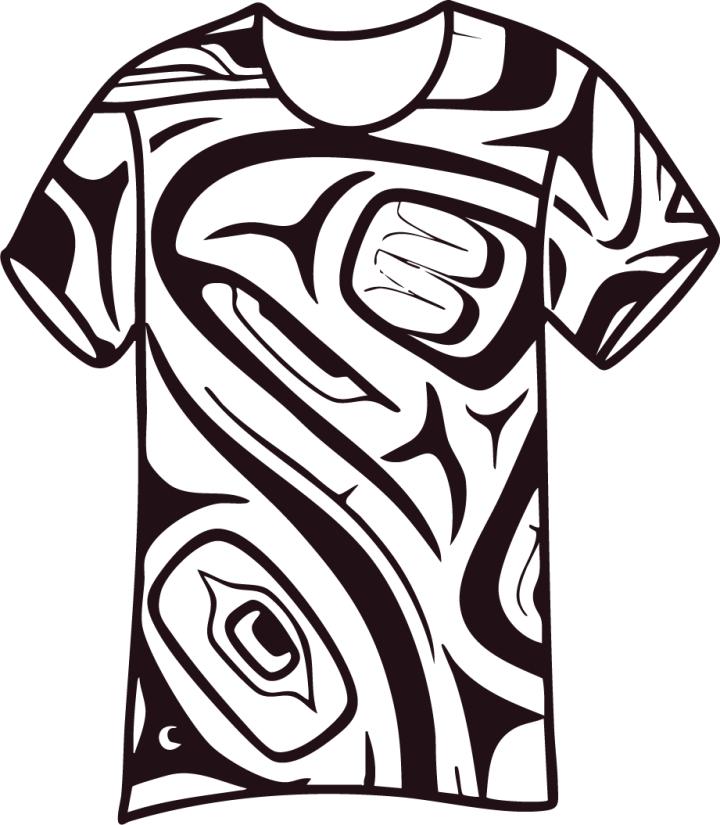
The Orange Shirt
Theme:
Residential School Impacts, Truth & Reconciliation, Honouring Survivors
This illustration represents the history and legacy of Orange Shirt Day, honouring the children who were taken to residential schools and the survivors who continue to carry those memories. The shirt (left intentionally simple in shape) becomes a canvas filled with Coast Salish–inspired forms, symbolizing the reclamation of culture, identity, and voice. The design acknowledges the harm caused by colonial systems while uplifting the strength, resilience and presence of Indigenous children, families and Nations.
Symbolism:
- Orange shirt: remembrance, honour, acknowledging the impacts on children who never came home and those who survived
- Internal Salish shape language: cultural identity enduring despite attempted erasure
- Flowing patterning: the movement of healing, stories and revitalization through generations
- Contrast between simple outline + complex interior: resilience within trauma, stories that continue to live inside community memory
Coast Salish Elements:
The shirt incorporates Coast Salish–inspired crescents, flow lines, and abstract forms that reflect local cultural teachings and the resurgence of Indigenous visual traditions as a form of healing and reclamation.
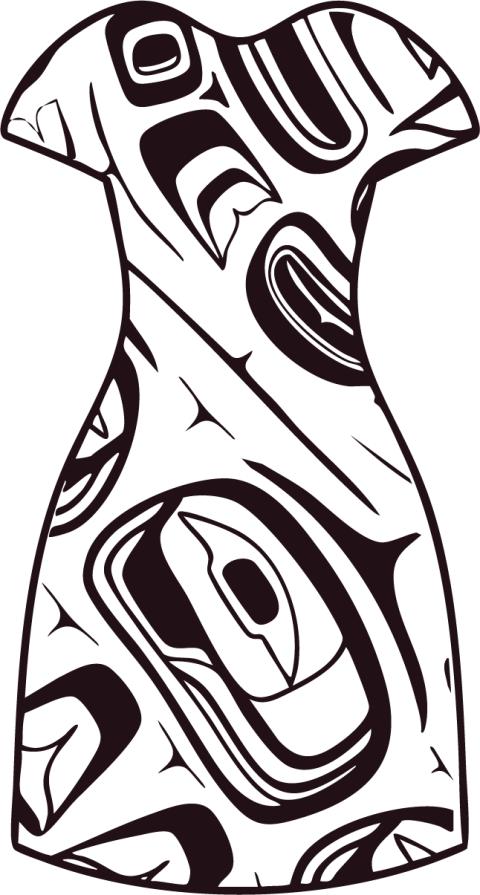
The Red Dress
Theme:
MMIWG2S+ — Justice, Remembrance, Awareness
This illustration represents the Red Dress as a symbol of remembrance for Missing and Murdered Indigenous Women, Girls, and Two-Spirit people. The dress, filled with Coast Salish–inspired formline patterns, honours the identities, lives, and spirits of those who have been taken. Its bold silhouette stands as both a memorial and a call to action, reminding us of the ongoing need for justice, safety and systemic change.
Symbolism:
- Red dress shape: absence, remembrance, honouring lives lost
- Coast Salish-inspired internal forms: identity, belonging, and cultural presence that cannot be erased
- Bold lines and shape: insistence on visibility, refusing silence
- Contrast of simple outline + rich interior: the depth of stories, lives and families forever impacted
Coast Salish Elements:
The interior patterning incorporates Coast Salish–inspired crescents, ovals and flowing shapes. This grounds the symbol within the culture and land while honouring the spirits of community members who are missing or murdered.
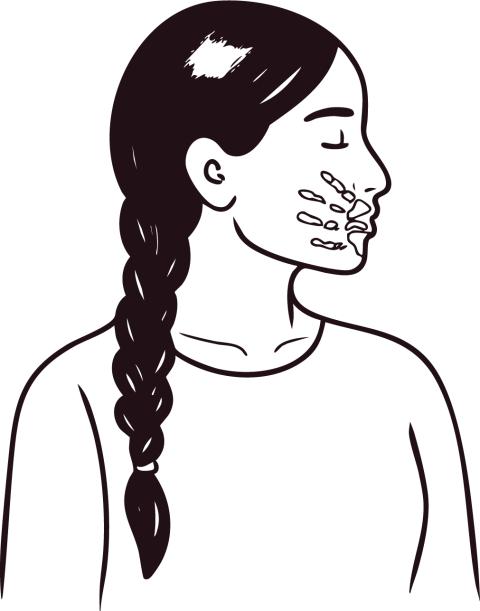
Silenced No More
Theme:
MMIWG2S+ — Justice, Awareness, Honouring Lives
This illustration honours Missing and Murdered Indigenous Women, Girls, and Two-Spirit people through the powerful symbol of the red handprint. The woman’s calm, steady posture reflects the strength and dignity of Indigenous women, while the handprint across her mouth acknowledges the violence, silencing, and systemic failures that have impacted so many. Her braid symbolizes identity, cultural continuity, and the resilience of communities demanding justice and safety for future generations.
Symbolism:
- Red handprint: awareness of violence, the silencing of voices and a call to justice
- Profile of an Indigenous woman: honouring the lives, identities and stories at the heart of this crisis
- Long braid: cultural identity, protection, teachings and generational strength
- Closed eyes: grief, remembrance, and connection to those lost
Coast Salish Elements:
The flowing linework and shape language throughout the hair and face echo Coast Salish visual rhythm, grounding the piece in local identity while amplifying the message of justice and remembrance.
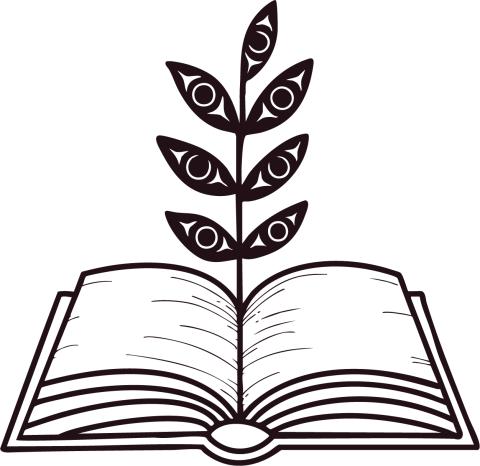
Knowledge Returns
Theme:
Residential School Impacts, Cultural Revitalization, Truth & Reconciliation
This illustration represents the resurgence of Indigenous knowledge, language, and memory after generations of attempted erasure through residential schools. The open book symbolizes truth-telling and reclaiming history, while the plant growing from its pages reflects new growth rooted in ancestral teachings. Each leaf is drawn with an eye-like form, signifying witnessing, remembrance, and the stories that survived through community resilience. The piece honours the restoration of culture, identity and learning that continues to strengthen future generations.
Symbolism:
- Open book: truth, knowledge, reclaiming history, education rooted in Indigenous perspectives
- Growing plant: cultural resurgence, healing, new beginnings rooted in ancestral teachings
- Eye-shaped leaves: memory, witnessing, the land and ancestors holding stories
- Upward growth: hope, transformation, the return of what was taken
Coast Salish Elements:
The leaf forms incorporate Coast Salish shape language, echoing the visual rhythm of the territory and grounding the symbolism in local culture and identity.
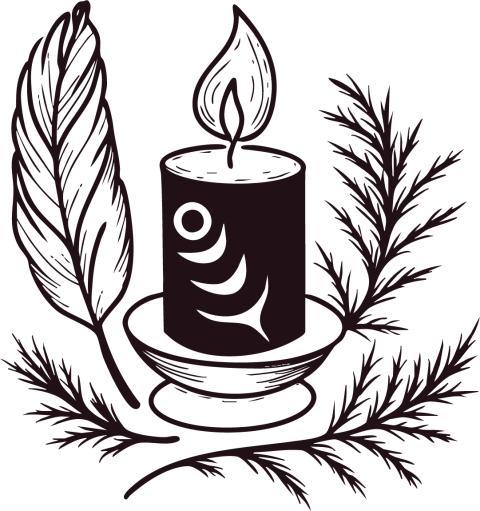
Light for the Ones We Remember
Theme:
MMIWG2S+, Residential School Remembrance, Healing & Ceremony
This illustration represents a ceremonial space of remembrance and healing. The candle symbolizes light for those who were taken, from missing and murdered Indigenous women, girls, and Two-Spirit people to the children who never returned from residential schools. The cedar branches represent cleansing, protection, and renewal, while the feather honours spirit, prayers, and the ongoing presence of ancestors. The Coast Salish–inspired form on the candle ties the act of remembrance back to identity, territory and cultural resilience.
Symbolism:
- Candle flame: remembrance, guiding spirits, keeping memory alive
- Feather: prayers, connection to spirit world, honour
- Cedar branches: cleansing, protection, community healing
- Coast Salish formline on candle: cultural presence and identity at the center of remembrance
- Offering dish: ceremony, respect, grounding traditions in everyday acts
Coast Salish Elements:
The candle’s surface incorporates Coast Salish shapes, grounding the ceremony in local culture and acknowledging the strength of these traditions throughout generational trauma, loss and healing.
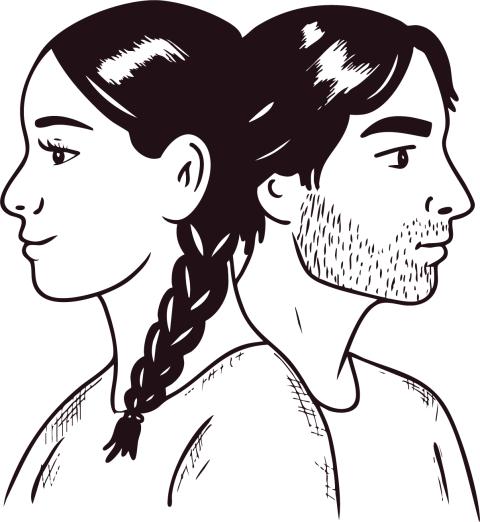
Two Spirits, One Path
Theme:
2Spirit Identity, LGBTQIA+ Inclusion, Balance & Belonging
This illustration represents the beauty and complexity of Two-Spirit identity. The two figures sit back-to-back, connected by a shared braid; symbolizing unity, balance, and the blending of masculine, feminine, and sacred roles within one spirit. Their mirrored posture reflects harmony and the strength that comes from holding multiple identities with pride. The piece acknowledges the place of Two-Spirit people within Indigenous Nations as knowledge keepers, healers, and essential members of community.
Symbolism:
- Shared brad: unity, duality, balance, interconnected identities
- Mirrored figures: harmony between masculine and feminine energies
- Closed eyes: peace, self-knowing, inner grounding
- Soft linework: gentleness, acceptance, emotional connection
Coast Salish Elements:
The flowing hair and subtle curves in the linework echo Coast Salish design rhythm. While minimal to honour the human-focus of the piece, the shapes carry the visual influence of the territory and grounding in local identity.
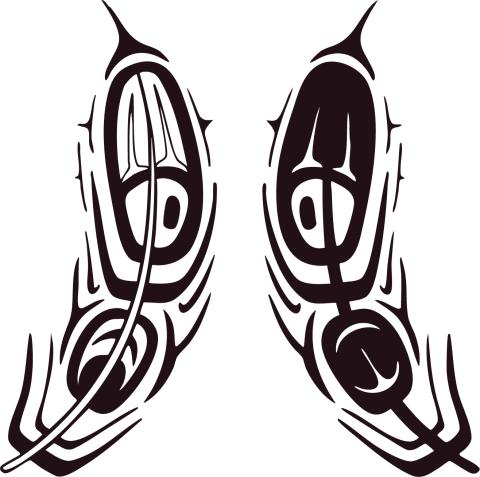
Feather of Witness
Theme:
Truth & Reconciliation, Honouring Survivors, Cultural Identity
This illustration uses Coast Salish–inspired shapes to create an abstract feather. A symbol of honour, guidance, and memory. Each form within the feather resembles an eye, representing witnessing, truth, and the stories carried through generations. The flowing lines suggest movement and continuity, acknowledging that healing is ongoing and carried collectively. This piece honours survivors, families, and communities who hold the responsibility of truth-telling and cultural resurgence.
Symbolism:
- Feather: honour, prayer, spirit, truth
- Eye-like internal forms: witnessing, remembering, the importance of being seen and heard
- Flowing shapes: continuity, resilience, cultural movement
- Pairing of two feathers: community support, shared responsibility, unity
Coast Salish Elements:
The design uses crescents, trigons, and ovoid forms common in Coast Salish visual language. The abstract composition allows the feather to remain both symbolic and culturally grounded.
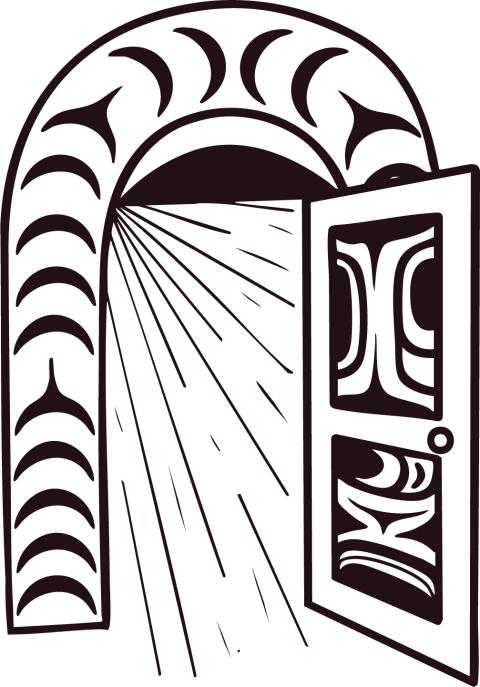
Opening the Door
Theme:
Truth & Reconciliation, Healing, Survivorship, New Beginnings
This illustration depicts a doorway opening into light; symbolizing truth, healing, and a path forward. Residential school survivors often speak of reclamation as “opening a new door,” and this piece honours that movement toward safety, identity, and community strength. The Salish patterning on the frame and door represents cultural teachings guiding the way, while the rays of light symbolize hope, justice, and the truths that can no longer be hidden.
Symbolism:
- Open door: truth emerging, new beginnings, reclamation of identity
- Light rays: healing, justice, clarity, community strength
- Salish forms on door + frame: cultural resilience, teachings, land-based identity
- Dark-to-light contrast: moving from harm into healing, past into future
Coast Salish Elements:
The doorway incorporates crescents, trigons, and rhythmic linework inspired by Coast Salish visual language. These elements root the image in local culture and honour the strength that has carried Indigenous communities through generations of resilience.
Thank you to Tamia for sharing her artistry and vision with us.
We are honoured to share her work and grateful for the knowledge, creativity and care reflected in each illustration.
This is the beginning of a more intentional effort to feature Indigenous artists and create space to celebrate the cultures, stories and perspectives that continue to shape communities today.