Celebrating Our Children, Our Future at Rhythms of Resilience 2026
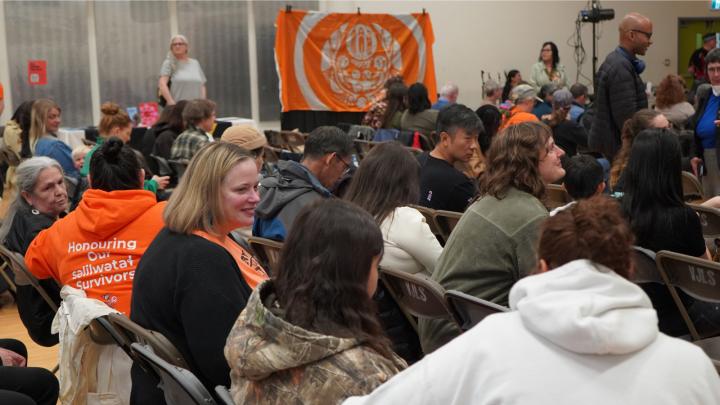
On September 24, community members of all generations gathered at the Japanese Hall for Rhythms of Resilience: Our Children, Our Future, an evening of song, dance, storytelling, food and community held in the lead-up to the National Day for Truth and Reconciliation.
Each year, Rhythms of Resilience creates space to honour Survivors and intergenerational Survivors of the Indian residential school and Indian hospital systems, remember the children who never came home and celebrate the strength, culture and knowledge Indigenous communities continue to carry forward.
This year, we centred Indigenous children and youth.
Young people are often spoken about as our future. But they are also part of their communities and Nations today. Their voices and stories matter now, and so do their cultures, identities, creativity and joy.
Beginning in a good way
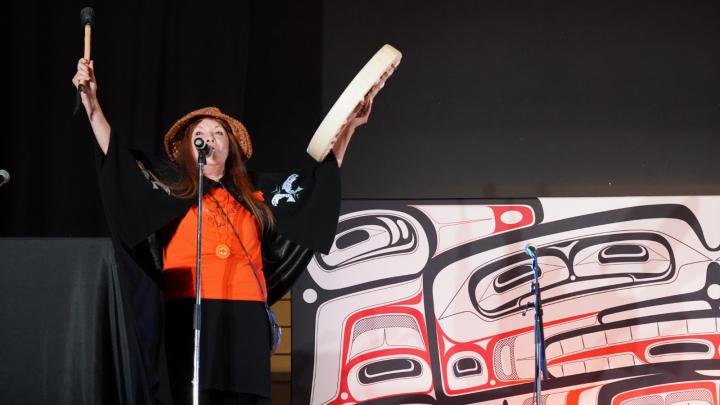
Elder Mary Point from xʷməθkʷəy̓əm (Musqueam) opened the evening, grounding the gathering in protocol, place and community. Elder Mary spoke about young people and the importance of stories in carrying knowledge, culture and connections.
Her words set the tone for an evening that brought generations together and celebrated the many ways culture and knowledge are carried forward.
From there, the evening unfolded through song, dance, storytelling and time spent together, with families, Elders, young people, artists and community members sharing the space.
Culture carried across generations
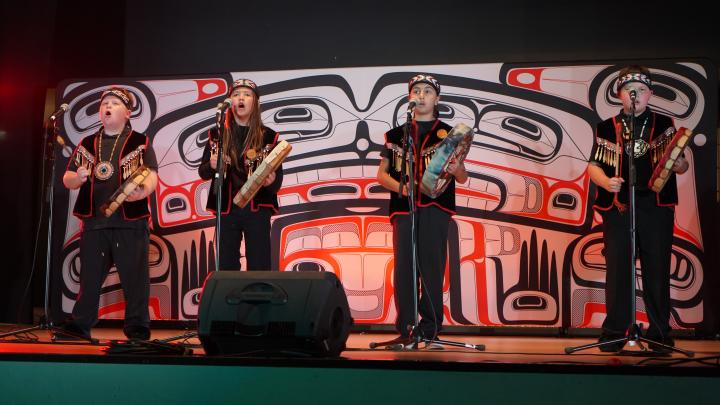
The Proud Little Warriors, a youth drum group from the Squamish Nation, brought song and drumming to the gathering.
Seeing young people take the stage felt especially meaningful given this year’s theme. They were not there simply as the next generation, but as young people already participating in their culture and community and carrying songs and teachings with them today.
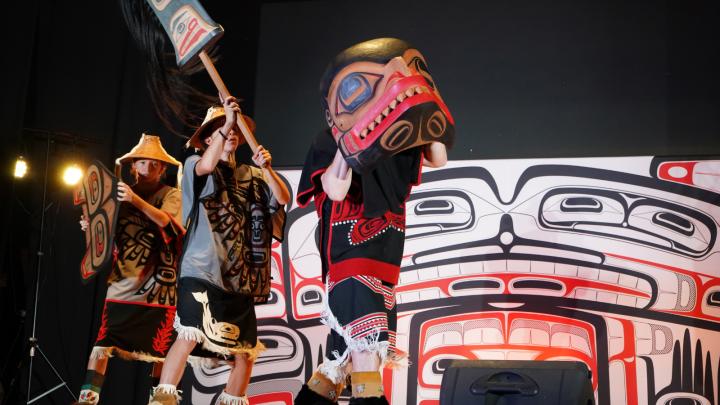
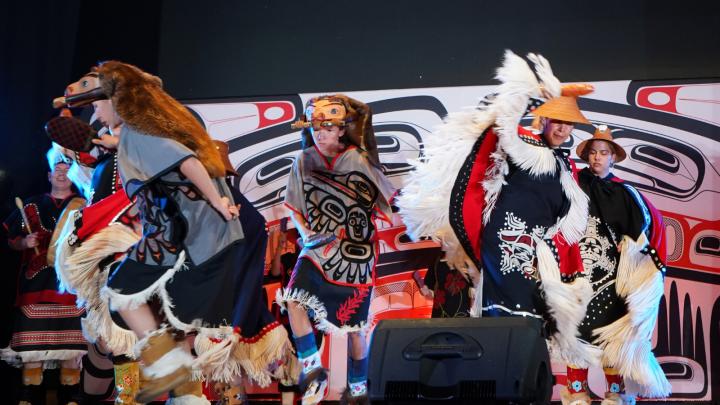
That intergenerational connection continued with the Dancers of Damelahamid, whose performance brought youth and senior members of the community together through song and dance. Rooted in generations of cultural revitalization, their performance showed traditions being shared, practised and carried from one generation to the next.
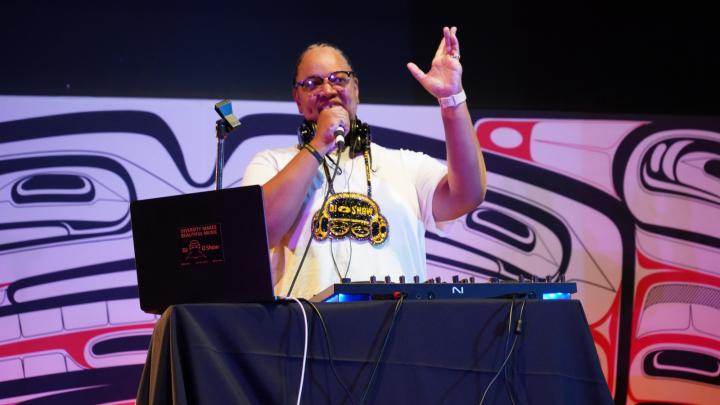
DJ O Show, award-winning DJ, speaker and proud Afro-Indigenous member of the Squamish Nation, brought her own energy to the evening through music. Her set brought a joyful, contemporary expression of Indigenous culture to the gathering.
Each brought something different to the evening, but together they showed culture being carried, shared and lived across generations.
Gathering in community
Beyond the stage, much of the evening was about simply being together.
Guests shared food prepared by Cedar Feast House Catering, visited Indigenous vendors and spent time connecting with friends, family and community.
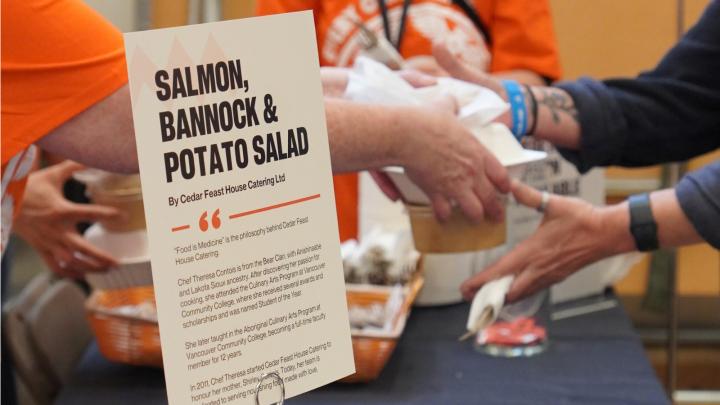
Indigenous artists, makers and entrepreneurs filled the vendor area with art, crafts, food and goods, giving guests an opportunity to meet the people behind the work and support Indigenous-owned businesses.
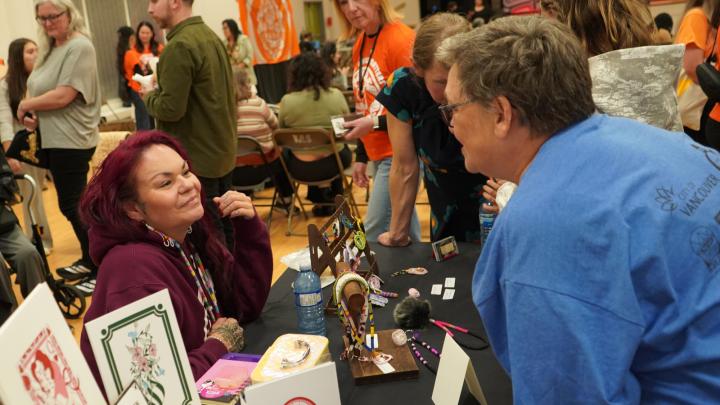
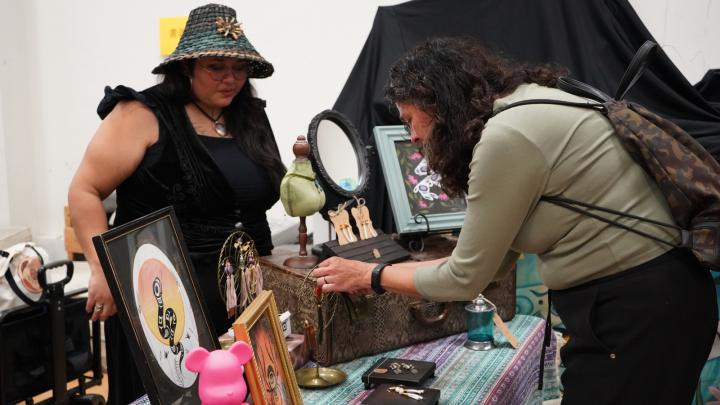
We also wanted families to be able to take part. Free childminding was available throughout the evening, cultural supports were provided by representatives from the Indian Residential School Survivors Society and ASL interpretation helped make the gathering more accessible.
All of it made space for people to spend time together, whether they came to watch a performance, share a meal, support a local maker, connect with community or simply be present.
Our children are here now
As we approach the National Day for Truth and Reconciliation, we remember the children who never came home and honour Survivors, intergenerational Survivors, families and communities who continue to live with the impacts of the Indian residential school and Indian hospital systems.
Remembering that history also means thinking about our responsibilities to Indigenous children and youth today.
Children and young people deserve to grow up connected to culture, language, family and community. They deserve to see themselves reflected in the spaces around them, to have their voices heard and to know that they belong.
And they deserve joy, not simply resilience.
Our Children, Our Future is about the future, but it is also about now. Children and youth are already part of their communities and Nations, with voices, experiences, cultures and dreams of their own.
As we continue the work of truth and reconciliation, may we continue making space for Indigenous children and youth while honouring the Survivors, Elders, families and communities who carry knowledge, culture and stories from one generation to the next.
Gratitude
Rhythms of Resilience would not be possible without the many people who brought their time, care and knowledge to the gathering.
We are grateful to the Elders, artists, performers, vendors, cultural supports, staff and volunteers who made the evening possible, and to the children, youth, families and community members who joined us.
Thank you for gathering with us in remembrance, celebration and community.
Rhythms of Resilience took place on the traditional, ancestral and unceded territories of the xʷməθkʷəy̓əm (Musqueam), Sḵwx̱wú7mesh (Squamish) and səl̓ílwətaʔɬ (Tsleil-Waututh) Nations. We express our gratitude to the First Peoples who continue to steward these lands and waters.
Indigenous Opening
Elder Mary Point, xʷməθkʷəy̓əm (Musqueam)
Performers
Vendors
Supports
Indian Residential School Survivors Society (cultural supports)
Vancouver Moving Theatre (sound + A/V)
Suzette Amaya (event photography)
Cedar Feast House Catering (Catering)